
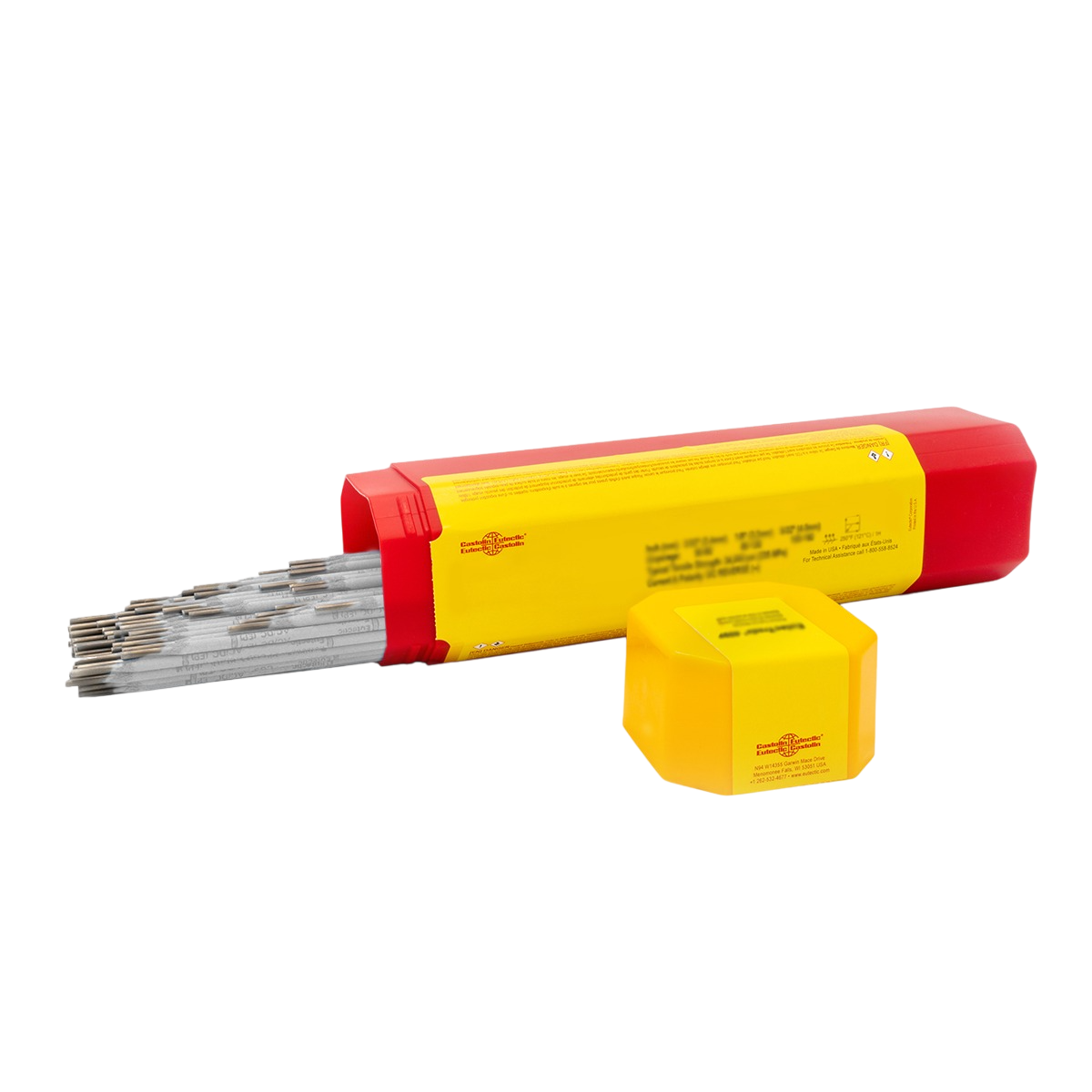
Product-specific image.
Steels Electrode
What this product is designed to do
A high-alloy, fully austenitic electrode for joining stainless and mild steels of unknown composition and dissimilar steels, including selected salt-rich and elevated-temperature service.
Key product points
- High-alloy, fully austenitic manual metal arc electrode for joining stainless and mild steels of unknown composition and dissimilar steels. The supplied manual describes resistance to corrosion and spalling in salt-rich environments, good strike and restrike characteristics, and service-temperature resistance up to 1800°F. Manual technical data: tensile strength 655 N/mm²; yield strength 448 N/mm²; AC/DC (+); 3.2 mm: 70–100 A; 4.0 mm: 110–150 A.
Where to use
- Marine salt-water discharge pumps, desalination equipment, salt baskets, carburising/reducing environments, and salt baths used in drawing and tempering operations. Confirm base-metal compatibility and service conditions before specifying.
Practical checks before the job
- Prepare clean weld areas and follow the current manufacturer procedure. The supplied manual lists AC/DC (+) and diameter-specific current ranges; use those values only after confirming electrode diameter, base metal, joint design and approved WPS. The manual notes that preheat may be unnecessary for some CE ranges but may be required according to carbon equivalent and section thickness. Do not generalise one preheat instruction to all base materials.
This guide supports product discovery and enquiry preparation. It is not a full operating instruction, welding procedure or installation specification. Confirm the exact grade, substrate, operating conditions and latest manufacturer technical and safety data sheets. Follow the approved site procedure and engineering approval where applicable.